Track 5
Track 5. Advanced Integrated Circuits for AI and Machine Learning
Chair: Ning Xu, Wuhan University of Technology, China
Co-Chair: Dan Niu, Southeast University, China
Co-Chair: Xianyang Jiang, Wuhan University, China
This track focuses on advanced integrated circuit
technologies for artificial intelligence and machine learning applications.
It explores novel architectures, circuit designs, and hardware–software
co-design approaches that enable efficient AI computation. Topics include AI
accelerators, neuromorphic and in-memory computing, low-power and
high-performance IC design, and emerging device technologies. The track also
addresses challenges in scalability, energy efficiency, and reliability for
edge and data-center AI systems. By tightly integrating algorithms with
hardware innovation, advanced ICs can significantly improve computing
efficiency and performance. Contributions are welcomed on theoretical
analysis, design methodologies, and practical implementations that support
intelligent computing for next-generation AI and machine learning systems.
Submission Link:
https://easychair.org/conferences/?conf=icccas2027
**Log in and choose "Track 5"
Track Chair Introduction
 Ning Xu, Wuhan University of Technology, China
Biography:
Professor Xu Ning is a full professor and doctoral supervisor at the School
of Information Engineering, Wuhan University of Technology. He received his
Ph.D. from the University of Electronic Science and Technology of China and
conducted postdoctoral research at Tsinghua University.
His research interests include electronic design automation (EDA), VLSI
design, hardware security, and network-on-chip systems. He has led and
participated in several national research projects, including programs
supported by the National Natural Science Foundation of China.
Professor Xu has published more than 70 academic papers, many of which are
indexed by SCI and EI, and has authored academic books as well as obtained
multiple invention patents and software copyrights.
He is also an active member of the academic community, serving as a senior
member of the China Computer Federation and contributing as a reviewer for
several international journals and conferences.
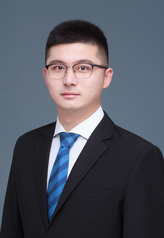 Dan Niu, Southeast University, China
Biography: Dan Niu
is a Young Distinguished Professor and Associate Dean at Southeast
University, and a Ph.D. advisor. He earned his doctorate from Waseda
University and was a visiting scholar at Lehigh University and the
University of Texas. His research spans artificial intelligence, EDA for
integrated circuits, autonomous systems, and time-series forecasting.
He has led multiple national and provincial projects and collaborated with
leading industry partners. He has published over 60 papers, including more
than 30 in top-tier venues such as IEEE TCAD, DAC, and AAAI. He has received
several major awards and honors, and actively contributes to professional
societies including IEEE and CCF.
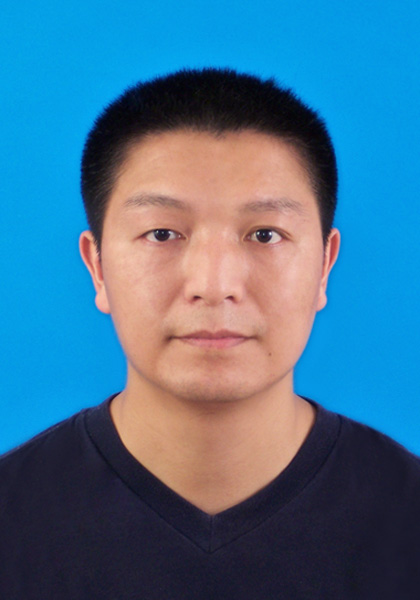 Xianyang Jiang, Wuhan University, China
Biography:
Xianyang Jiang received a Ph.D. degree in pattern recognition and
intelligent systems from Huazhong University of Science and Technology,
Wuhan, China, in 2003. From 2003 to 2004, he was a postdoc in Institute of
Computing Technology, Chinese Academy of Sciences, Beijing, China. From 2004
to 2005, he was a posdoc at INRIA-IRISA, France. From 2005 to 2007, he was
an Assistant Professor at the Institute of Computing Technology, Chinese
Academy of Sciences, Beijing, China. Since 2008, he has been an Associate
Professor in Wuhan University. From 2015 to 2016, he was a visiting scholar
at the University of California, Santa Barbara. He is the author of over 40
articles. His research interests include VLSI design, neuromorphic
computing, and computer architecture.