Special Session 12
Topic: Information Persistence and Next-Generation Coding for Data-Intensive Systems
The rapid growth of data-intensive systems is creating new challenges for efficient information representation, storage, transmission, and long-term usability. Massive volumes of heterogeneous data are continuously generated, processed, compressed, transmitted, and reused across communication networks, cloud and edge platforms, intelligent sensing systems, and distributed infrastructures. In such environments, information may undergo repeated transformations, compression, and reconstruction, making it increasingly important to preserve useful information while maintaining high coding efficiency under limited storage, bandwidth, and computational resources.
Next-generation coding techniques provide fundamental tools for addressing these challenges by combining information-theoretic principles with advanced coding, learning, and data-driven methods. Beyond conventional coding optimized for a single compression or transmission process, emerging approaches are expected to support persistent information representation, adaptive compression, task-oriented processing, and reliable data reuse across evolving system requirements. This special session aims to bring together researchers from information theory, source and channel coding, data compression, communications, and intelligent systems to explore new theories, algorithms, and applications for information persistence and next-generation coding in data-intensive systems.
Topics of interest include, but are not limited to:
1. Information persistence, data representation, and information-theoretic foundations
2. Next-generation source coding and data compression
3. Advanced channel coding and error-control techniques
4. Joint source-channel coding and cross-layer coding
5. Rate-distortion theory and fundamental limits of data-intensive systems
6. Coding for repeated compression, transformation, storage, and data reuse
7. AI-driven, learning-based, and generative coding techniques
8. Semantic, task-oriented, and goal-oriented communications and coding
9. Distributed source coding, network coding, and coded computing
10. Coding for distributed, cloud, edge, and large-scale storage systems
11. Coding for multimodal, heterogeneous, and high-dimensional data
12. Reliable and efficient information processing for emerging intelligent systems
Submission Link:
https://easychair.org/conferences/?conf=icccas2027
**Log in and choose "Special Session 12"
Special Session Chairs
 Dan Song
Jimei University, China
Biography: Dan Song (IEEE Senior Member) received the Ph.D. degree in communication and information system from the Department of Information and Communication Engineering, Xiamen University, Xiamen, China, in 2023. She is currently an Associate Professor with the Navigation College, Jimei University, Xiamen, China. Her primary research interests include source and channel coding, marine communication, and quantum communication. She received the Outstanding Young Scholar Award of IEEE ICCCAS in 2024 and the Outstanding Doctoral Dissertation of Fujian Province in 2025. She is an Editorial Board Member of the Computer Science and Technology.
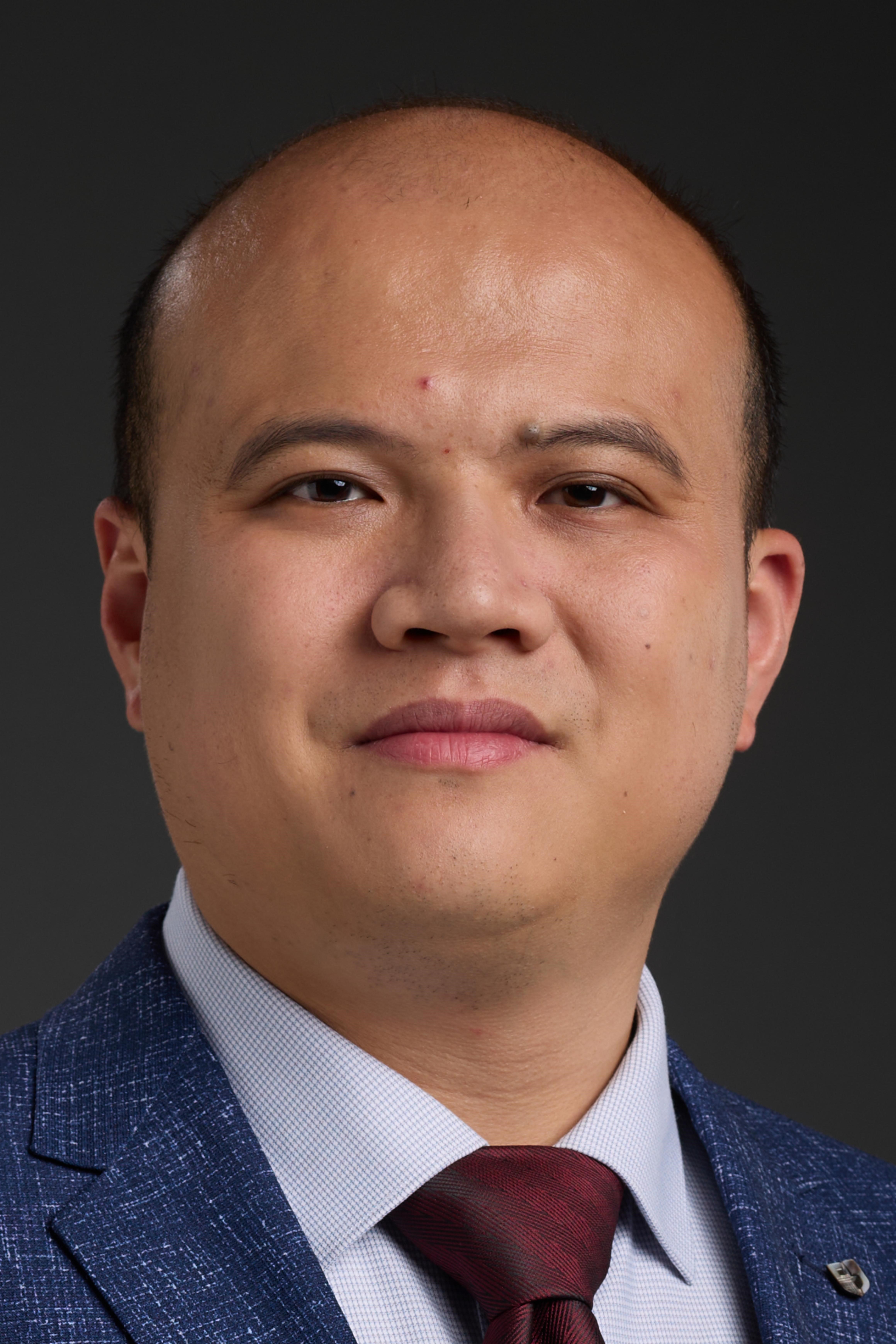 Qiwang Chen
Huaqiao University, China
Biography: Qiwang Chen (IEEE Senior Member) received the B.Sc. degree in electronic science and technology from Huaqiao University, Xiamen, China, in 2012, and the Ph.D. degree in Communication Engineering from Xiamen University, Xiamen, in 2018. He was a Visiting Ph.D. Student at the Faculty of Engineering, Monash University, Australia. He is currently an Associate Professor with the School of Information Science and Engineering, Huaqiao University. His primary research interests include information theory and coding, joint source-channel coding, chaos communication, and the Internet of Things.
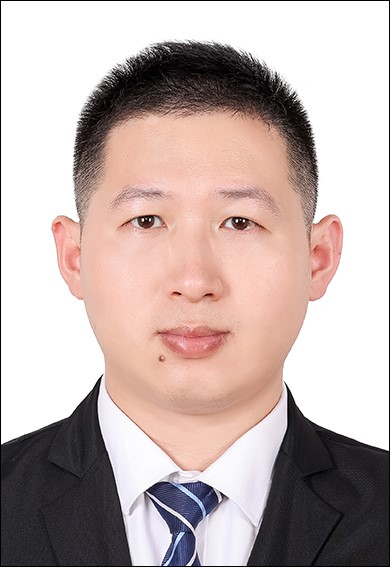 Zhiping Xu
Jimei University, China
Biography: Zhiping Xu (IEEE Senior Member) received the Ph.D. degree in information and communication engineering from Xiamen University, Xiamen, China, in 2021. He is currently an Associate Professor with the School of Ocean Information Engineering, Jimei University, Xiamen, China. He has authored or coauthored more than 50 journals and conference papers. His current research interests include joint source-channel coding, coded modulation, maritime/underwater object detection, the Internet of Things, and synthetic aperture sonar/radar system. He has been a session chair for IEEE ICWCSP 2021, JCICE 2025, ICSPS 2026, ICCCAS 2026, a TPC member for IEEE ISMICT 2022/2023, JCICE 2023/2024/2025, ICSPS 2024/2025, and serves as reviewers for many SCI journals.
 Chen Chen
Huaqiao University, China
Biography: Chen Chen (IEEE Senior Member) received the Ph.D. degree in communication and information system from the Department of Information and Communication Engineering, Xiamen University, Xiamen, China, in 2018. She is currently an Associate Professor with the School of Information Science and Engineering, Huaqiao University, Xiamen, China. Her research interests include information and coding theory, joint source-channel coding, Internet of Things, semantic communication, etc.