Special Session 13 (CFP Download)
Topic: Artificial Intelligence and Intelligent Optimization for Smart Systems
Smart systems must interpret complex data and make effective decisions under limited resources, multiple constraints, and changing conditions. Artificial intelligence provides methods for perception and prediction, while intelligent optimization supports planning, scheduling, and control. Bringing these approaches together can improve how systems use information and respond to practical demands.
This special session invites original research on artificial intelligence and intelligent optimization, including their integration in smart systems. The scope covers deep learning and computer vision, image classification, object detection and segmentation, multimodal learning, evolutionary computation, swarm intelligence, metaheuristics, reinforcement learning, and learning-assisted optimization. Relevant applications include medical image analysis, intelligent transportation and logistics, robotics, autonomous systems, smart agriculture, and resource management.
We welcome methodological contributions, comparative studies, and application-oriented research. Of particular interest are approaches that address data scarcity, computational efficiency, robustness, and decision-making under uncertainty. The session aims to bring together researchers working on intelligent perception and optimization, encourage discussion of reproducible evaluation, and support the development of methods that connect algorithmic advances with practical system requirements.
Topics of Interest:
- Deep learning and computer vision for intelligent perception
- Image classification, object detection, segmentation, and medical image analysis
- Multimodal learning, intelligent sensing, and data-efficient learning
- Evolutionary computation, swarm intelligence, and hybrid metaheuristics
- Reinforcement learning and learning-assisted intelligent optimization
- Smart transportation, logistics, robotics, autonomous systems, and edge AI
Submission Link:
https://easychair.org/conferences/?conf=icccas2027
**Log in and choose "Special Session 13"
Special Session Chairs
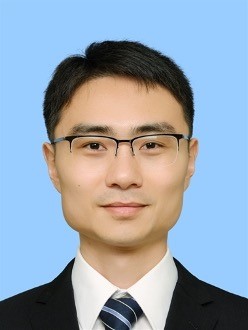 Jiacheng Li
Assistant Professor, Kanagawa University, Japan
Biography: Jiacheng Li is an Assistant Professor in the Department of Applied Systems and Mathematics, Faculty of Informatics, Kanagawa University, Japan. He received his Ph.D. in computer engineering from Hosei University, Japan, in 2020. His research focuses on artificial intelligence, combinatorial optimization, evolutionary computation, swarm intelligence, and hybrid metaheuristic algorithms. He studies vehicle routing, transportation scheduling, electric vehicle logistics, emergency relief distribution, and evacuation planning, with an emphasis on practical constraints and uncertainty.
His work has appeared in journals including Scientific Reports, IEEE Access, and the Journal of Advanced Computational Intelligence and Intelligent Informatics, as well as international conference proceedings. He received the Best Oral Presentation Award at ICSI 2024 and the Young Investigator Award at CCAI 2026. He has contributed to international academic activities through special session organization, program committee service, and peer review, including activities associated with IEEE CEC, IEEE SMC, ICSI, and CACS.
At Kanagawa University, he teaches and supports programming and computer science education and supervises student research on optimization, artificial intelligence, and image recognition. His current interests include reinforcement learning for adaptive optimization and the integration of intelligent perception with planning and decision support for transportation, logistics, robotics, and other real-world smart systems and engineering applications.
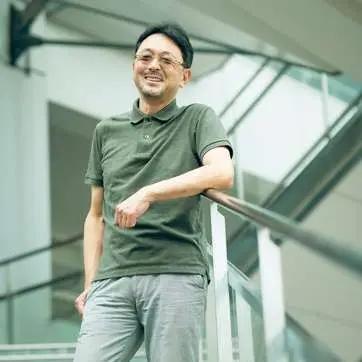 Masanori Akiyoshi
Professor and Vice President, Kanagawa University, Japan
Biography: Masanori Akiyoshi is Vice President of Kanagawa University, Japan, and a Professor in the Department of Applied Systems and Mathematics, Faculty of Informatics. He received his B.Eng., M.Eng., and Dr.Eng. degrees from Kyoto University in 1985, 1987, and 1996, respectively. He began his career at Mitsubishi Electric Corporation in 1987, where he held research and research management positions. He subsequently joined Osaka University in 2005 and Hiroshima Institute of Technology in 2012, before becoming a Professor at Kanagawa University in 2014.
His research interests include artificial intelligence, knowledge information systems, cognitive science, machine learning, multi-agent systems, and affective information processing. His work combines fundamental research with practical applications, including knowledge extraction, decision support, human behavior modeling, and agent-based simulation. Recent research topics include knowledge graphs for AI reasoning, natural language interaction, semantic interpretation of images, and assistive technologies for people with visuospatial difficulties.
Prof. Akiyoshi is a Fellow of the Institute of Electrical Engineers of Japan (IEEJ). He has received recognition from the Japanese Society for Artificial Intelligence and the IEEJ, and has contributed to international conferences through program leadership and organizational service.
 Masato Noto
Professor, Kanagawa University, Japan
Biography: Masato Noto is a Professor in the Department of Applied Systems and Mathematics, Faculty of Informatics, Kanagawa University, Japan. He received his Ph.D. in Engineering from Hokkaido University, Japan, in 1996. His research spans artificial intelligence, intelligent information systems, evolutionary computation, agent-based systems, and optimization techniques.
His work encompasses both the foundations of computational intelligence and its application to practical problems. His research interests include distributed constraint satisfaction, swarm intelligence, ad hoc networks, wireless sensor networks, and smart agriculture. His recent collaborative studies address vehicle routing, electric vehicle fleet management, and the joint optimization of wireless charging infrastructure and electric bus scheduling. He also contributes to research on deep learning for plant disease recognition, insect damage detection, and fine-grained few-shot image classification.
His publications have appeared in journals including Scientific Reports, IEEE Access, and the Journal of Advanced Computational Intelligence and Intelligent Informatics. His ongoing research includes developing a framework for evaluating the performance of swarm intelligence optimization algorithms. Through these activities, he connects optimization, intelligent perception, and networked systems with applications in transportation, logistics, and agriculture.
 Jia Guo
Designated Assistant Professor, Nagoya University, Japan
Biography: Jia Guo is a Designated Assistant Professor at the Global Research Institute for Mobility in Society, Institutes of Innovation for Future Society, Nagoya University, Japan. He received his Ph.D. in Computer and Information Sciences from Hosei University, Japan, in 2020. From 2020 to 2021, he held research and assistant professor positions at Kyoto University.
His research interests include evolutionary computation, neural networks, adaptive swarm intelligence, and industrial applications of intelligent optimization. He particularly investigates parameter-free swarm optimization and adaptive search mechanisms. His research also explores connections between swarm-based optimization and neural network learning, including hyperparameter optimization, feature selection, and applications to robotic coordination and path planning.
Dr. Guo received the Young Author Award at the International Symposium on Artificial Life and Robotics in 2017 and an IEEE Outstanding Paper Award at the 9th IEEE Cyber Science and Technology Congress in 2024. His academic service includes guest editorial work for Frontiers in Computational Neuroscience and peer review for international journals. He has also organized special sessions at IEEE CEC, IEEE SMC, IJCNN, and ICSI, contributing to international exchanges in computational intelligence and intelligent systems.