Special Session 15
Topic: Biomedical Signal Processing and Intelligent Neuroengineering
This special session brings together researchers in biomedical signal processing and neuroengineering to explore advances in physiological sensing, signal processing, and artificial intelligence. It focuses on challenges such as noise and stimulation artifacts, variability across individuals, limited labeled data, and multimodal signal integration. Contributions may address EEG, ECG, EMG, EOG, PPG, local field potentials, and spike recordings, with applications in health monitoring, brain-computer interfaces, neuromodulation, functional mapping, and rehabilitation.
Topics of interest include, but are not limited to:
1. Biomedical signal acquisition and sensing: Physiological sensors, wearable monitoring, electrophysiological recording, and data acquisition
2. Biomedical signal processing: Denoising, artifact suppression, time-frequency analysis, feature extraction, and signal modeling
3. Artificial intelligence for biomedical signals: Machine learning, deep learning, self-supervised learning, interpretability, and generalization
4. Multimodal sensing and signal fusion: Integration of electrophysiological, hemodynamic, motion, and other physiological measurements
5. Brain-computer interfaces and neural decoding: Neural representation, intention recognition, adaptive decoding, and human-machine interaction
6. Neuromodulation and functional mapping: Signal analysis for focused ultrasound, magnetic or electrical stimulation, evoked neural responses, and closed-loop control
7. Health monitoring and rehabilitation: Physiological state assessment, neurological function assessment, EMG analysis, gait recognition, and rehabilitation evaluation
Submission Link:
https://easychair.org/conferences/?conf=icccas2027
**Log in and choose "Special Session 15"
Special Session Chairs
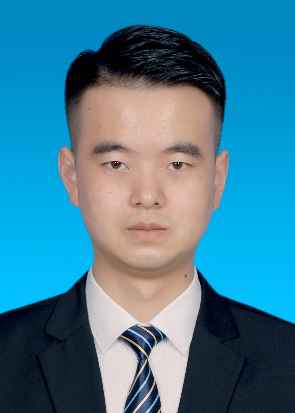 Ye Yuan
Assistant Professor, Xi'an Jiaotong University, China
Ye Yuan is an Assistant Professor at the School of Electronic Science and Engineering, Xi'an Jiaotong University, China. He received his Ph.D. in Biomedical Engineering from Xi'an Jiaotong University and undertook joint doctoral research training at Harvard Medical School. His research interests include neural and physiological signal processing, machine learning for human movement analysis, adaptive control, and distributed optimization. His work applies these methods to ultrasound-evoked neural signal analysis, brain functional mapping, and gait recognition and control for rehabilitation systems. His publications have appeared in IEEE Transactions on Industrial Electronics, IEEE Transactions on Biomedical Engineering, and NeuroImage. He served as a reviewer for the 26th and 27th International Conference on Neural Information Processing (ICONIP). He is the principal investigator of a National Natural Science Foundation of China Young Scientists Fund project (2027-2029) on high-resolution cortical functional imaging using transcranial focused ultrasound.