Special Session 5
Topic: Multi-Scale and Multi-Modal Communication Systems for Future Networks
The evolution of future networks calls for new communication paradigms that operate seamlessly across multiple physical scales and modalities. From molecular and nanoscale communication mechanisms to terahertz and neural communication, as well as hybrid bio-electromagnetic systems, the integration of multi-scale and multi-modal communication technologies is becoming essential for emerging applications such as the Internet of Bio-Nano Things, intelligent sensing, human–machine interfaces, and in-body networks. This Special Session aims to bring together researchers from communication engineering, nanotechnology, biology, neuroscience, and related fields to share the latest advances, discuss key challenges, and explore new architectures for multi-scale and multi-modal communication systems that will shape the foundation of future 6G/7G networks.
Submission Link:
https://easychair.org/conferences/?conf=icccas2027
**Log in and choose "Special Session 5"
Special Session Chairs
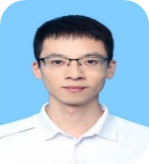 Yu Huang (Lead Chair) 黄煜
Guangzhou University, China 广州大学
Biography: Yu Huang
received the Ph.D. degree from South China University of Technology,
Guangzhou, China. During the Summer vacations of 2018 and 2019, he was a
visiting student with Yonsei University, Seoul, South Korea. From January
2020 to March 2021, he visited Cranfield University, Bedford, U.K., for
molecular communication techniques. He is currently an Associate Professor
with Guangzhou University, Guangzhou, China. His main research interests
include machine learning for emerging communication systems, molecular
communications, and wireless communications. He was the recipient of IEEE
ICCCAS'2024 Outstanding Young Scholar Award, the Second-prize recipient of
the Guangdong Province Electronic Information Science and Technology Award
(Natural Sciences), and the winner of the IEEE CTW' 2019 Data Bakeoff
Competition (Molecular MIMO).
 Miaowen Wen 温淼文
South China University of Technology, China 华南理工大学
Biography: Dr. Wen received the B.S. degree from Beijing Jiaotong University, Beijing, China, in 2009, and the Ph.D. degree from Peking University, Beijing, China, in 2014. From 2012 to 2013, he was a Visiting Student Research Collaborator with Princeton University, Princeton, NJ, USA. From 2019 to 2021, he was a Hong Kong Scholar with the Department of Electrical and Electronic Engineering, The University of Hong Kong, Hong Kong. He is currently a Professor with South China University of Technology, Guangzhou, China. He has published two Springer books entitled Index Modulation for 5G Wireless Communications and Index Modulation for OFDM Communications Systems, as well as 290+ research papers, which include 210+ journal papers and 80+ conference papers. His research interests include a variety of topics in the areas of wireless and molecular communications. Dr. Wen was a recipient of the IEEE Asia-Pacific (AP) Outstanding Young Researcher Award in 2020, and six Best Paper Awards from the IEEE ITST’12, the IEEE ITSC’14, the IEEE ICNC’16, the IEEE ICCT’19, the IEEE ISWCS’22, and the EAI QSHINE’22. He was the winner in data bakeoff competition (Molecular MIMO) at IEEE CTW'19, Selfoss, Iceland. He served as a Guest Editor for the IEEE JOURNAL ON SELECTED AREAS IN COMMUNICATIONS and for the IEEE JOURNAL OF SELECTED TOPICS IN SIGNAL PROCESSING (two special issues). Currently, he is serving as an Editor for the IEEE TRANSACTIONS ON COMMUNICATIONS, the IEEE TRANSACTIONS ON MOLECULAR, BIOLOGICAL, AND MULTISCALE COMMUNICATIONS, and the IEEE COMMUNICATIONS LETTERS.
 Xuan Chen
Guangzhou University, China 广州大学
Biography: Xuan
Chen received the Ph.D. degree from the South China University of
Technology, Guangzhou, China, in 2022. She is currently a Lecturer with
Guangzhou University. She has conducted visiting research at Yonsei
University, Seoul, South Korea, and York University, Toronto, Canada,
focusing on molecular communication techniques. Her research interests
include wireless and molecular communications. She received the Second Prize
of the Guangdong Province Electronic Information Science and Technology
Award (Natural Sciences).